
Laboratory for Building Materials and Structure Diagnostics
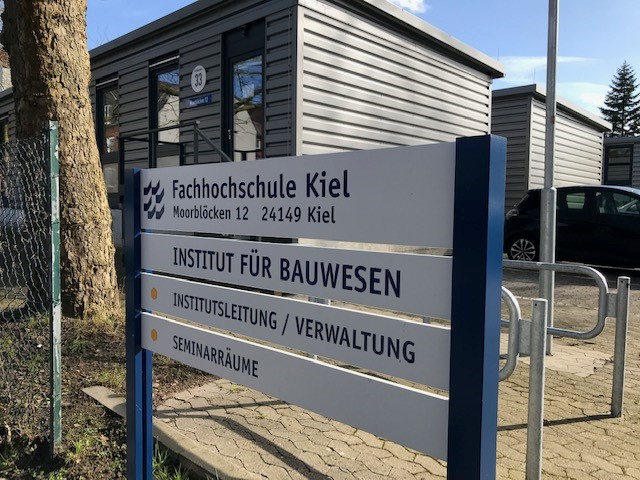
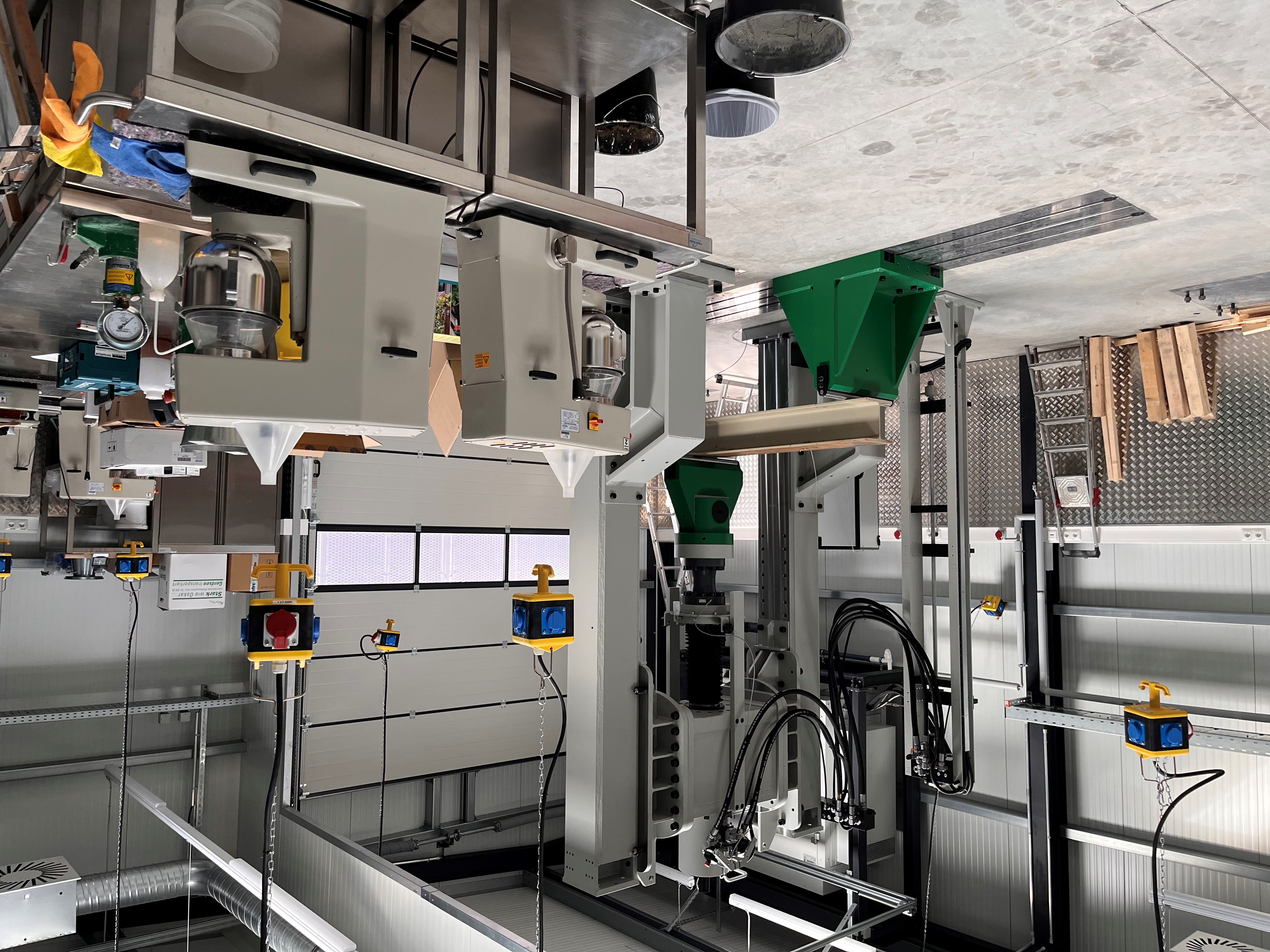
After the establishment of the Institute for Civil Engineering in 2018, the laboratory was set up within just a few years. Today, there is a laboratory equipped with state-of-the-art testing technology where students can learn the basic material testing procedures, try out several diagnostic methods and conduct experimental investigations as part of their final theses or student projects. Furthermore, the laboratory offers the possibility to perform material tests and structural diagnostic examinations for external clients.
The laboratory is temporarily housed at two locations. On the campus, the construction materials technology area is located in building C35. The structural diagnostic facility with non-destructive testing (NDT) specimens is located in building F10 at the "Seefischmarkt".
Leadership
Prof. Dr.-Ing. Kenji Reichling
Building Materials Tester
Research Assistant
Student Assistants
Moritz Quast
, Ivan Renic
- Building Materials
- Material Testing
- Construction Diagnostics
- Non-Destructive Testing (NDT)
- Structural Health Monitoring
- Mechanical Testing of Material Properties
- Non-Destructive (NDT) and Minimal Invasive Testing of Structures and Materials
- Development and Testing of NDT-Methods
- Hydraulic Testing System for determining mechanical parameters consiting of:
- Compressive strength test frame 5000 kN, e.g. for concrete, wood, bricks
- Flexural strength test frame 300 kN, e.g. for concrete, fibre reinforced concrete as 3- or 4-point bending test
- Combined compressive and flexural strength test frame (300kN, 10 kN), e.g.for cement, mortar and gypsum test samples as well as lightweight and aerated concrete
- Equipment for determining the Young´s Modulus and the indirect tensile strength (splitting) of concrete
- Water Impermeability testing setup, e.g. for concrete
- Wet Concrete and Mortar testing (e.g. flow consistency, air entrainment meter, Hägermann-Flow Table)
- Cement Testing (e.g. Vicat, Le Chatelier, Blaine)
- Paddle Mixers for Concrete and Mortar Mixers
- Specimen Storage
- Humidity cabinet, e.g. for mortar specimens
- Temperature controlled water storage for concrete and mortar specimens
- Drying cabinet, e.g. for small sized specimens and testing materials
- Climate chamber with CO2 control for carbonation tests, e.g. on cementitious materials
- Ultrasonic Device for determining the dynamic modulus, e.g. of concrete
- RCM Device (Rapid Chloride Migration): Determination of the chloride migration coefficient on concrete drill cores
- Potentiostats for electrochemical (corrosion) tests
- Potential Mapping: minimal-invasive localisation of areas with a high corrosion risk on reinforced concrete structures
- Resistivity Meter: non-destructively on the structure or destructively in the laboratory (e.g. drill core)
- Cover Meters: non-destructive localisation of reinforcement bars, determination of concrete cover depths and minimal-invasive determination of rebar diameters in concrete structures
- Radar Scanners: non-destructive localisation of reinforcement bars or installations or determination of structure dimensions
- Ultrasound Scanners, Impact-Echo: e.g. non-destructive determination of structure dimensions and localisation of hollow areas by pulse transmission or echo
- Microwave and Capacitive Sensors: non-destructive determination of moisture in poreous building materials
- Rebound Hammer: non-destructive or minimal-invasive determination of concrete compressive strength at the structure (R- and Q-Values)
- Tear off Test Device: for determining the surface tensile strength or adhesive pull strength
- Torrent Permeability Tester: non-destructive determination of the gas-permeability of concrete
- Bore Dust Extraction Device: e.g. for extracting concrete samples in order to determine the chloride content
- Concrete Core Drill
- Crack Monitoring: electronic or analog recording of crack widths. Also crack magnifier, scales, etc.
- Endoscope: e.g. for assessing hollow areas and bore holes
- Climate Sensors: e.g. air and structure temperature, rel. air humidity
- Monitoring Concept for Grout Joints: The FINO3 Platform as an Example
- Project budget: €450,465
- Funding Agency: Ministry of Buisness, Transportation, Labor, Technology, and Tourism of the State of Schleswig-Holstein
- Grant Recipient: FuE GmbH
- Project Leader: Prof. Dr.-Ing. Kenji Reichling
- Project Duration: February 1, 2024 – March 31, 2027
2026
2026 Concrete Canoe Regatta Season: "SeaHawks Look Back on a Successful Season"
2025
New Universal Testing Machine for the Lab“Four Hours of Precision Work for Nine Metric Tons of High-Tech”
Concrete Canoe Race in Eindhoven (NL)“Gold for Kiel University of Applied Sciences’ Concrete Canoe Team”
2024
- Concrete Canoe Regatta 2024“Canoe Reeves: Concrete on Course”
- Masonry Day 2024:“To the trowels, get set, go!” and here
- Conference on Digitalization in Structural Diagnostics at Kiel University of Applied Sciences (2024), Video
2022
- Cube Press Offers New Possibilities for Testing Building Materials
- 2022 Concrete Canoe Regatta: “On the Havel in a Concrete Canoe” and here
- CampusTV segment“A Canoe Made of Concrete”
- Student project“Concrete Canoe Regatta 2022”
2021
- Radar measurements on reinforced concrete components
- CampusTV segment on“New Seating Area for the Campus”
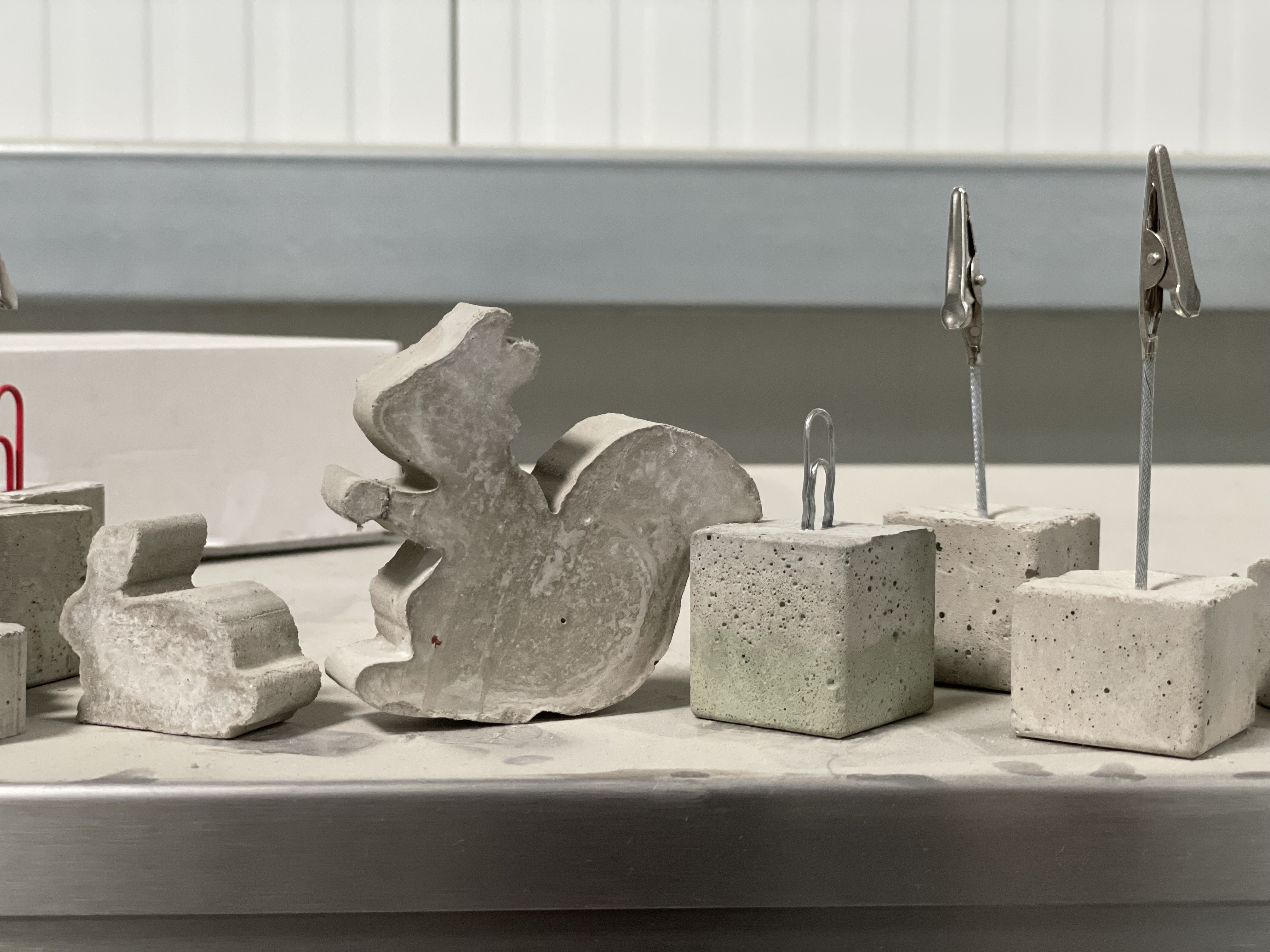
- Student Project "Bench from the Materials Lab"
The theses listed below, completed as part of the Civil Engineering program, were supervised (primarily) by Prof. Reichling.
2026
- Jelka Villwock (B.Eng.): Influence of Recycled Aggregate on the Mechanical Properties of Concrete
- Sandra Zerkowska ( B.Eng.): Use of Fungal Mycelium to Promote Crack Healing in Cement-Bound Construction Materials
- Eduard Ribak ( B.Eng.): VES resistivity tomography: Geophysical fundamentals and initial applications to reinforced concrete structures
2025
- Tilman Sievers (B.Eng.): Development of Geopolymer Concretes Based on Raw Materials Containing Silty Sand
(Winner of the 2025 Award for Outstanding Work from the Department of Media and Civil Engineering) - Finn Halkjaer (B.Eng.): Sealing Cracks in Concrete Using Microorganisms
- Victory Ehiosun Imasi (B.Eng.): Consolidation of North German Sand-Seawater Mixtures by Electrodeposition
2024
- Annika Kemper (B.Eng.): Collection and Analysis of Structural Diagnostic Data Using Digital Methods
- Bjarne Tolkmit (B.Eng.): Assessment of the circular-economy-compliant renovation of operational buildings using the Itzehoe Road Construction Depot as an example
- Nikola Weiser (B.Eng.): Development and Characterization of a Microorganism-Produced Building Material with Improved Properties
(Winner of the 2024 Award for Outstanding Work from the Department of Media/Civil Engineering) - Oke Jasper (B.Eng.): Development of a Cement-Bound Hemp Concrete
- Fredi Homi ( B.Eng.): Development of an ultra-lightweight concrete with the highest possible compressive strength
2023
- Nele Günther (B.Eng.): Development of a methodology for determining the chloride content in drill cuttings samples and creation of a repair concept for a bridge
- Rouven Böckenholt (B.Eng.): Development of a lightweight wood-based concrete for load-bearing structures
- Florian Ganzenmüller (B.Eng.): Development of an ultra-high-strength, low-density fine-grained concrete for use in fiber-reinforced concrete structures
Directions
- Laboratory "Campus"
Building C35
Grenzstr. 19
24149 Kiel
Germany
Directions Campus (Google)
- Office and Laboratories "Seefischmarkt"
Building 9 (F9) and 10a (F10)
(Zentrum für maritime Technologie und Seefischmarkt)
Wischhofstr. 1-3
24148 Kiel
Germany - Directions Seefischmarkt (Google)
- Mail and Package Delivery (Campus)
Kiel University of Applied Sciences
Faculty of Media and Civil Engineering
Laboratory for Building Materials and Structure Diagnostics
Grenzstr. 3
24149 Kiel
Germany