
Furniture made of textile concrete (2023)
The Idea
Building C13 on the HAW Kiel campus features a foyer in the entrance area (on the Moorblöcke side). The Media Department would like to install seating here to allow for more productive use of the space. However, the foyer serves as an emergency exit, which is why items that contribute to fire load—such as furniture with standard upholstery—are not suitable. This led to the idea of having students design concrete furniture as part of an Elective Module.
During the 2022–2023 winter semester and the 2023 summer semester, civil engineering students from Kiel University of Applied Sciences will tackle this project together with students from the Muthesius University of Fine Arts and Design in Kiel.
The Draft
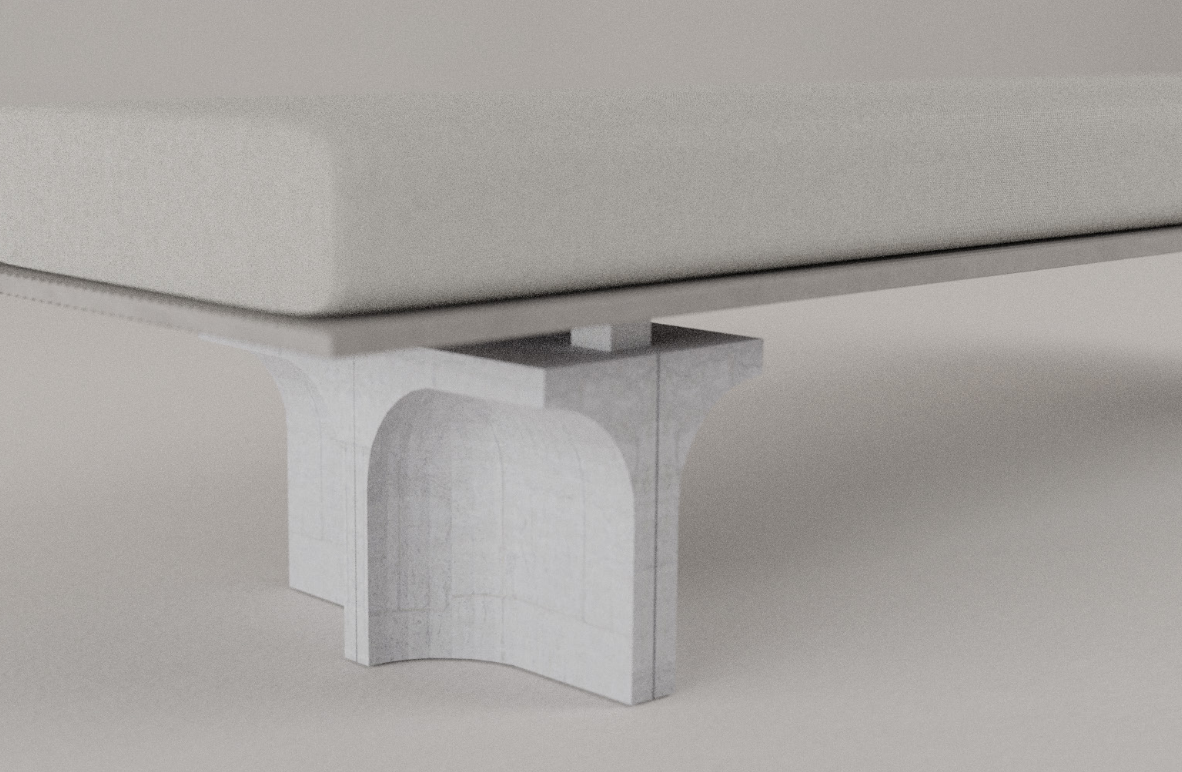
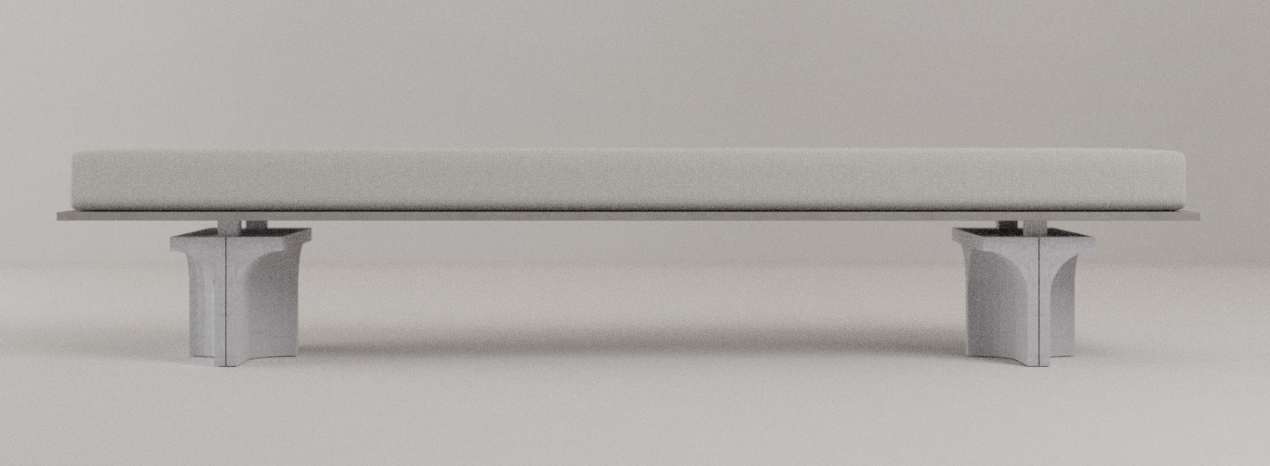
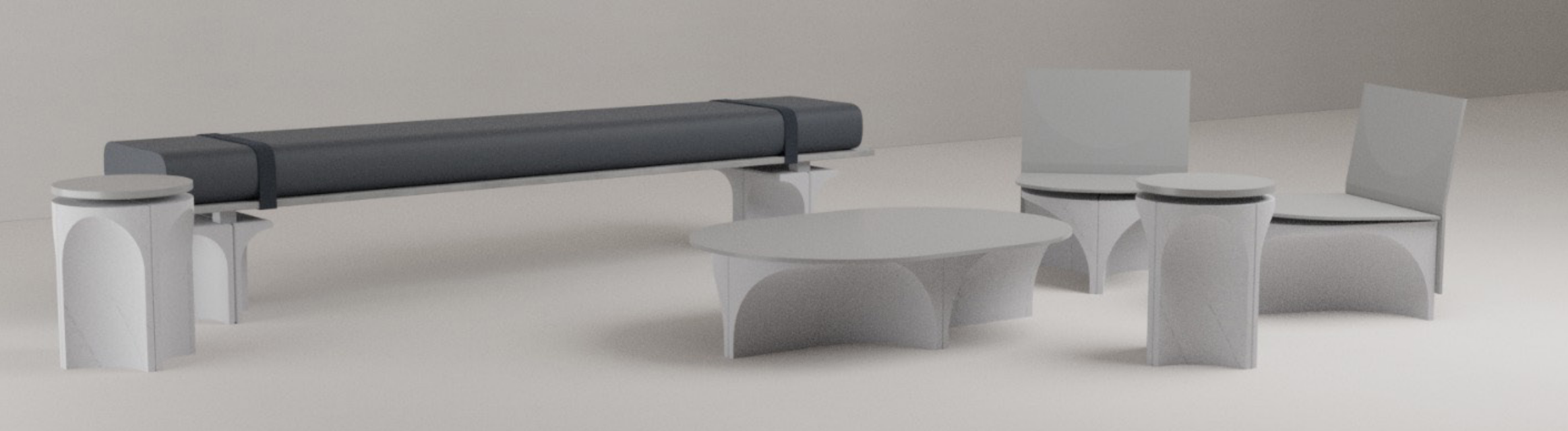
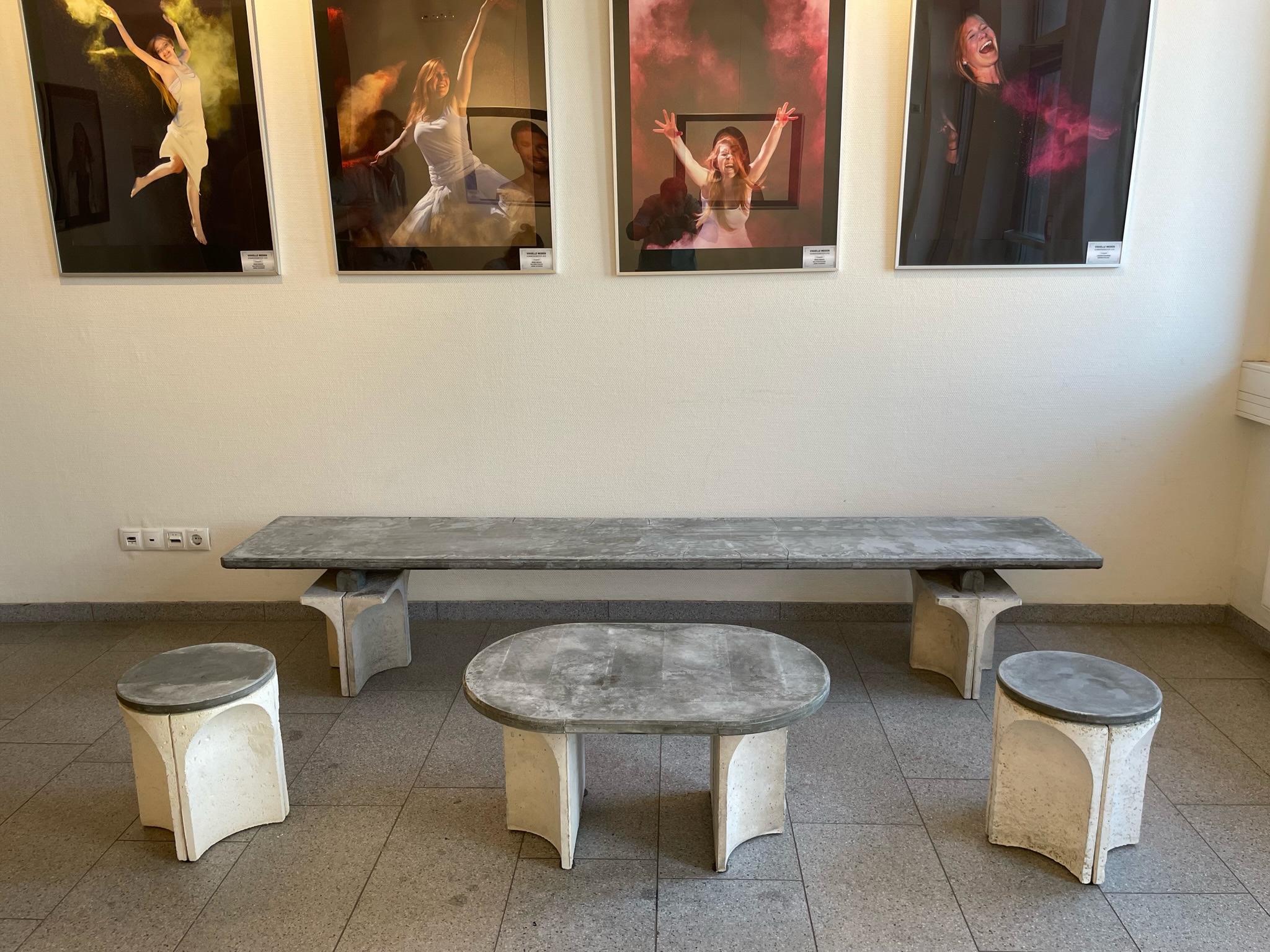
The students first developed several designs, which were discussed in terms of their feasibility (loads, formwork, etc.). Through a democratic process, the team selected a design that incorporates elements from conventional civil engineering structures as well as various aspects of concrete as a material. The chosen design was created by Arista Meier and Sören Herber.
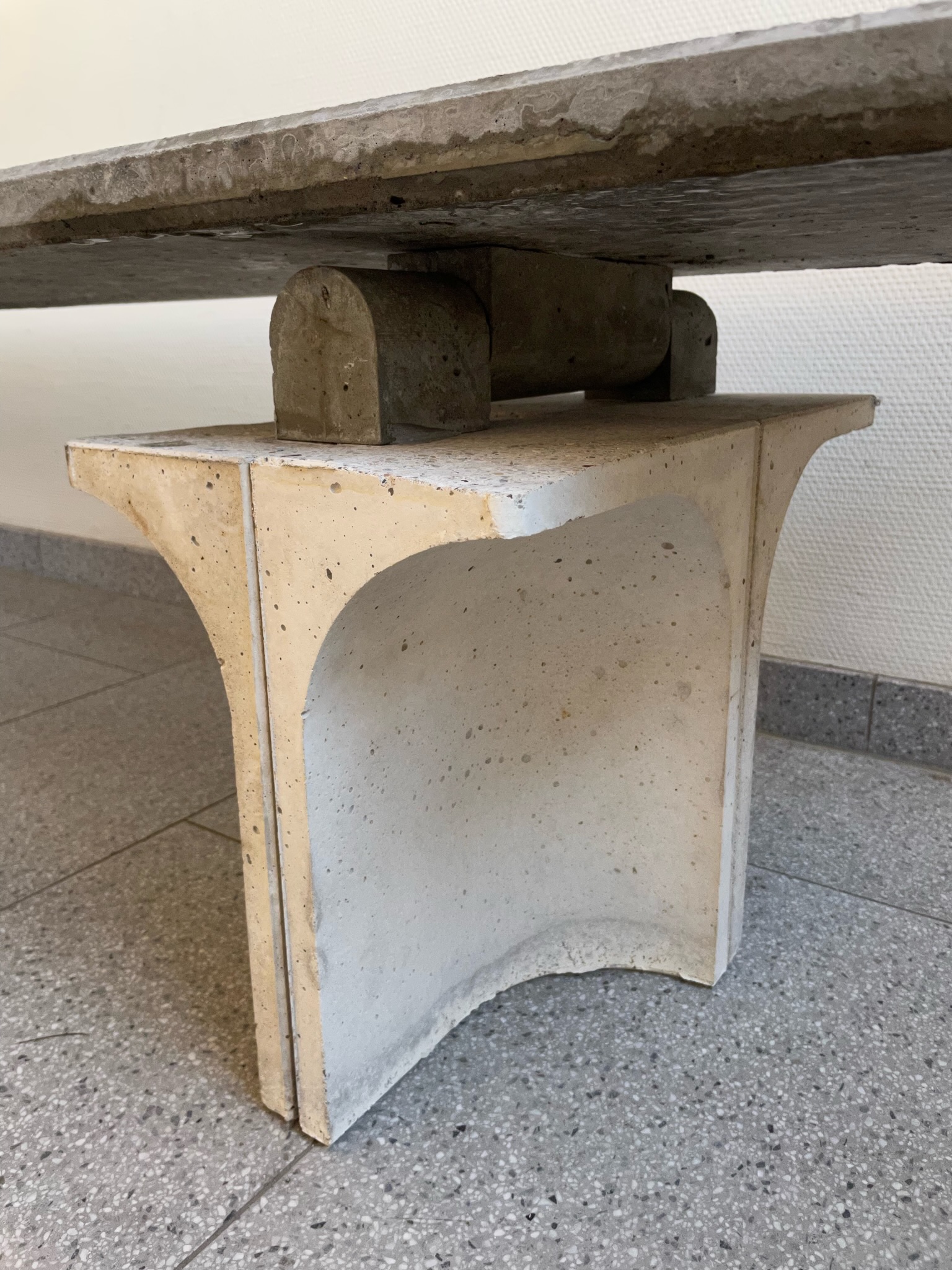
The seat of the bench was designed to be very slim and was made from ultra-high-strength fine concrete with a two-layer carbon fiber reinforcement. In contrast to the modern material—textile-reinforced concrete—standard concrete is used for the legs.
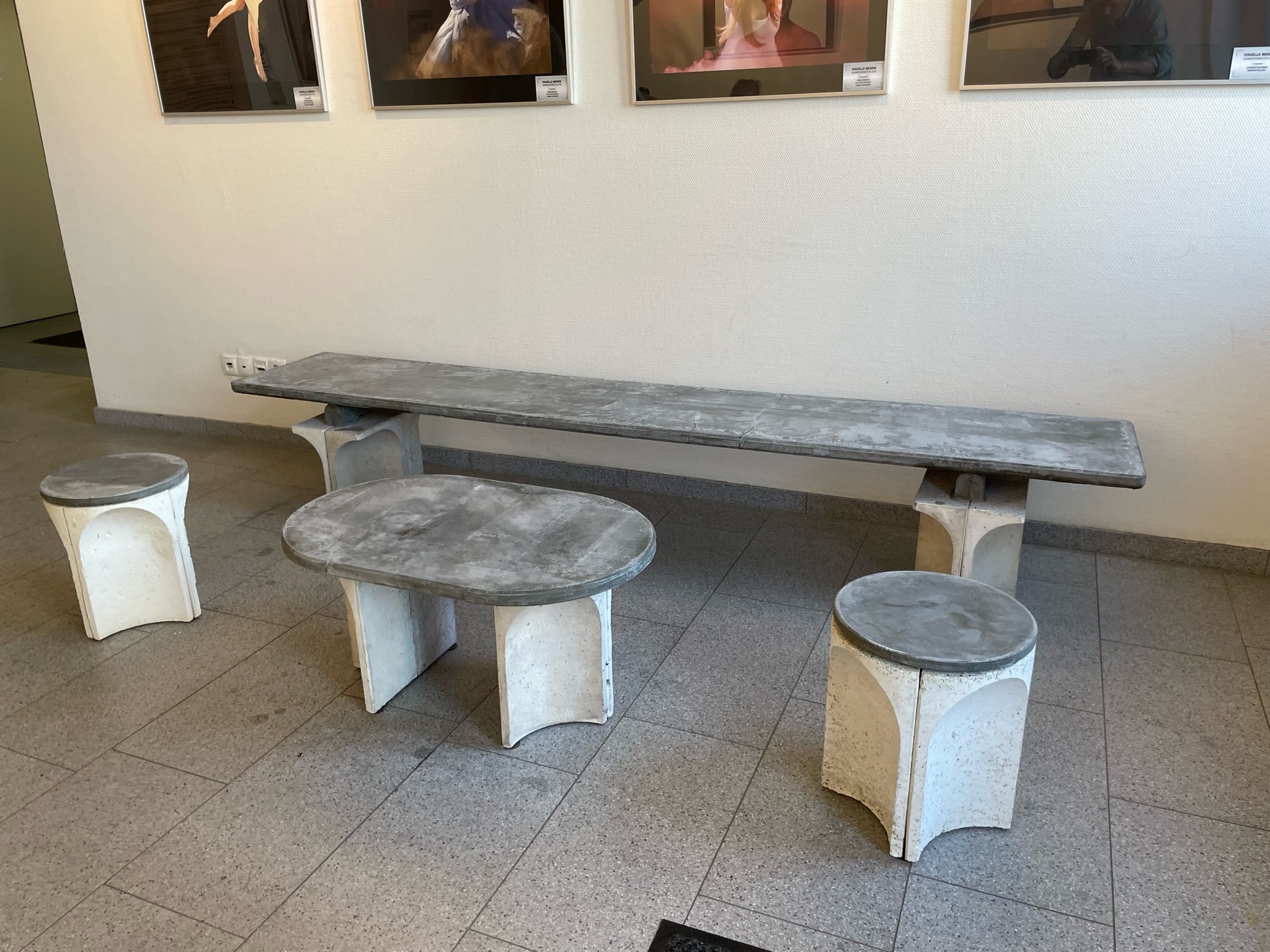
A stool and a table were also derived from the basic design. The stools are intended to be movable by users, so their legs are made of lightweight concrete. The lightweight concrete was developed as part of a bachelor’s thesis and contains sawdust to reduce its bulk density.
The Concrete
A key aspect of the design involves the use of different types of concrete. The seating surfaces, which are subjected to bending stresses, are designed to be as slender as possible. The innovative building material known as fiber-reinforced concrete is ideally suited for this purpose. Fiber-reinforced concrete consists of fine-grained concrete into which technical textile reinforcements—such as carbon, glass fiber, or basalt—are embedded to increase load-bearing capacity. Due to the fabric’s excellent corrosion resistance, the concrete cover can be significantly reduced, enabling very slender structures. The fine-grained concrete was developed to achieve approximately twice the compressive strength of standard concrete. The bench’s support legs are made of standard concrete, creating a contrast with the seating surface.
The stools are intended to be moved around by users, so their weight must be kept as low as possible through the use of lightweight concrete. The bench and table are intended for stationary use only, which is ensured by their greater weight.
To better visually distinguish the different structural components from one another, both gray and white cements, as well as black pigments, were used.
The Team
Supervision:
- Dr. Kerstin Meyer (MKH)
- Yvonne Richter (Kiel University of Applied Sciences)
- Prof. Dr.-Ing. Kenji Reichling (Kiel University of Applied Sciences)
Students at MKH
Winter Semester 2022/2023:
- Ozan Atalay
- Jim Brummer
- Julia Conrad
- Leon Ehmke
- Jona Hecht
- Sören Herber
- Arista Meier
- Louisa Pankow
- Elisa Porsche
SS2023:
- Alina Eikmeier
Students at Kiel University of Applied Sciences
Winter Semester 2022/2023:
- Louisa Gertig
- Noreen Hamer
- Anne Sophie Hering
- Timon Hinz
- Nils Oprotkowitz
- Marcel Seliger
- Tilman Sievers
- Bjarne Tolkmit
- Nikola Weiser
- Timmy Wong
SS2023:
- Lucas Blumtritt
- Ahmad Homam Diwan
- Jakob Feddersen
- Daniel Harder
- Jesse Hoffmann
- Niklas Horch
- Hinnerk Thun