Development of concrete repair system made of textile layers with basalt fibers and KKS
Development of a Durable Reinforced Concrete Repair System with Cathodic Corrosion Protection to Upgrade and Ensure Load-Bearing Capacity (SI-E-KKS)
Responsible: | Prof. Dr.-Ing. Stephan Görtz |
Project Team: | Saied Zabihi-Moghaddam, M.Sc. |
Funding Agency: | Federal Ministry of Education and Research (BMBF) |
Total Funding: | €1.53 million |
Funding amount (Kiel University of Applied Sciences): |
|
Duration: | October 1, 2022 – August 31, 2026 |
Project partners: |
|
Brief Description
Numerous reinforced concrete infrastructure structures, such as bridges, tunnels, underground parking garages, and multi-story parking garages, are currently facing high repair costs; in Germany alone, billions are invested annually in these projects. The primary cause of damage is generally chloride-induced corrosion resulting from de-icing salt exposure. Repairs are often carried out using one of the following two methods:
- Replacement of chloride-damaged concrete with new alkaline reprofiling concrete
- Installation of cathodic corrosion protection
However, if a significant corrosion process has already begun in the reinforcement, the concrete must be additionally reinforced in both cases—either by adding reinforcement (or bonding laminates, slitting in reinforcement, etc.). This is very costly and, due to the exposure of the reinforcement, constitutes an intervention in the load-bearing structure of the structure during construction, which often requires extensive shoring as well. In addition to the high construction costs, the temporary loss of structural functionality during construction poses a significant problem.
As part of the research project, the following partners have formed a consortium to develop an optimized repair and retrofitting system:
Kiel University of Applied Sciences, Prof. Dr. Görtz |
|
Munich University of Applied Sciences, Prof. Dr. Dauberschmidt |
|
University of Applied Sciences Münster, Prof. Dr. Heimbecher |
|
De Nora Deutschland GmbH |
|
Hitexbau GmbH |
|
Master Builders Solutions Deutschland GmbH |
|
Schwalbe Construction Company |
|
Wacker Chemie |
|
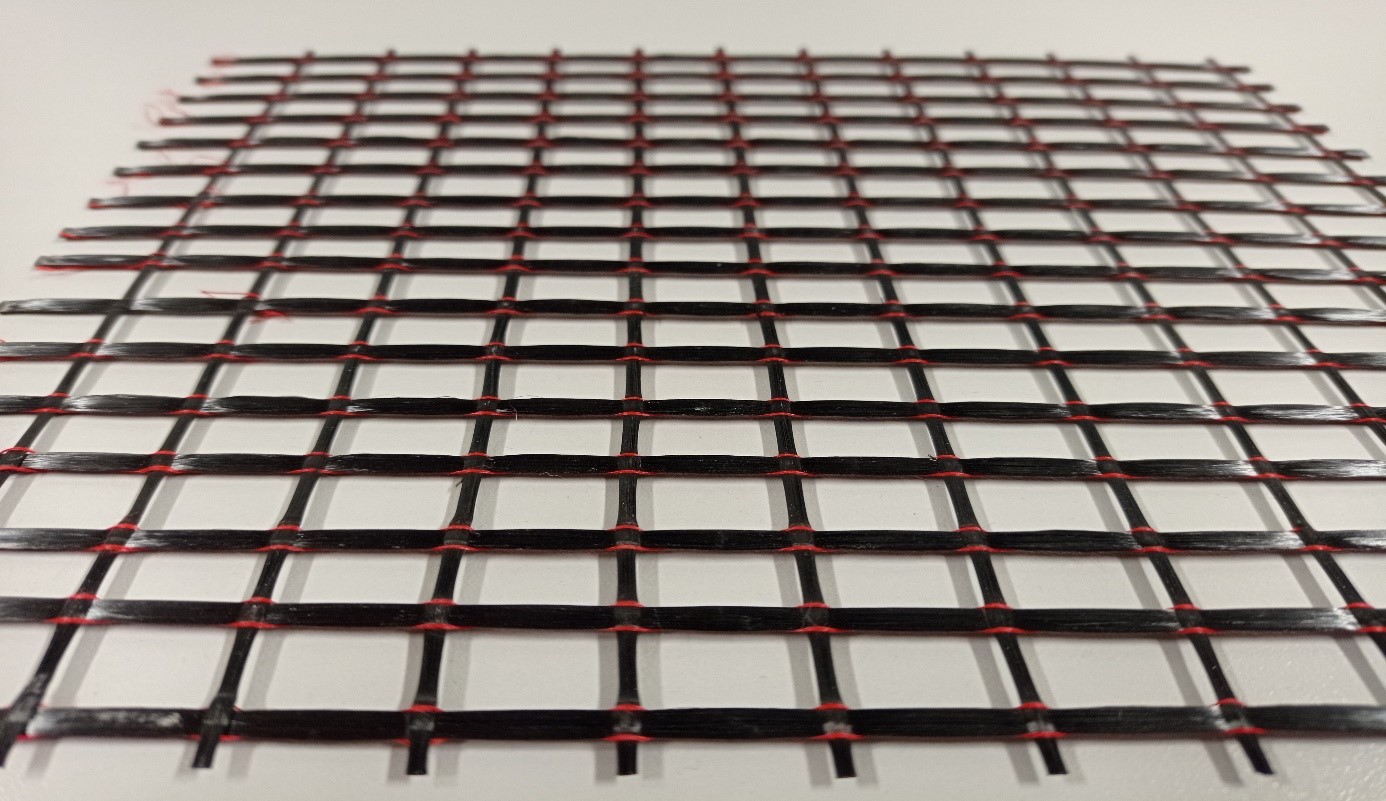
The goal of the project is to develop an innovative system that allows damaged reinforced concrete components to be retrofitted without major intervention while simultaneously providing long-term protection against corrosion. To this end, a textile basalt fabric designed to withstand static and fatigue loads will be developed, and a titanium wire will be woven into it so that a protective current can be applied as cathodic corrosion protection. By combining it with the load-bearing basalt fabric, this cathodic corrosion protection (CCP) repair method can also be used on concrete components with advanced corrosion; strengthening and permanent corrosion protection can be achieved in a single step. Since there is no need for costly measures such as blast cleaning the chloride-contaminated concrete or replacing the reinforcement, concrete repairs can be carried out at a significantly lower cost and with less downtime. Several operators of infrastructure structures have already expressed interest in the development, and the City of Kiel will provide a real-world project for a pilot application.