
Grimstad Social Media
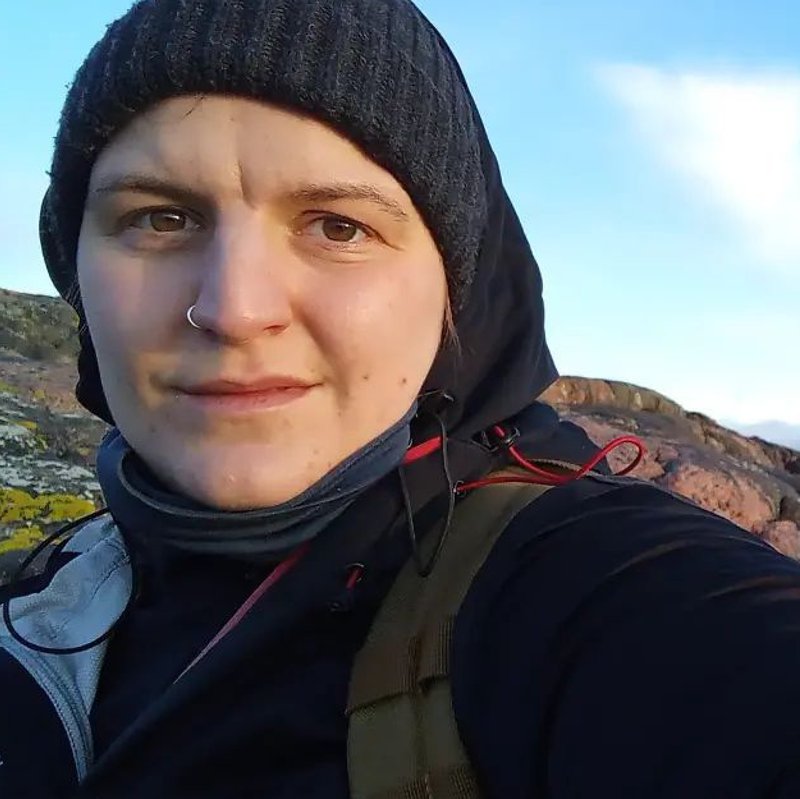
After the Christmas and New Year break I went straight back to Norway, I'm doing another semester! Why stop when it's at its best?
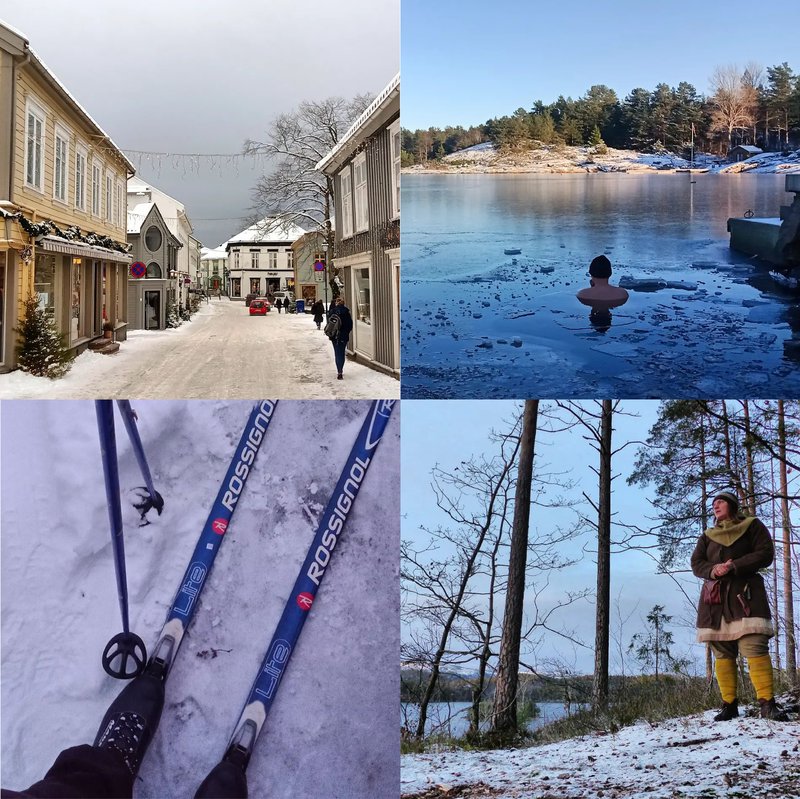
Norway and early history - the area from the Bronze Age to the Viking Age has always fascinated me and there would hardly be any other place to relive it so magnificently. I've been a reenactor and historical role-player for years, so of course I couldn't pass up the opportunity to take a few photos in a suitable outfit and visit lots of museums and historical sites. For example, the @arkeologiskmuseum Stavanger, the @historiskmuseumoslo and the old Tingvatn meeting place at @fornminneparken - all with great objects from the Bronze Age, the Migration Period and the Viking Age. Viking helmets didn't have horns [...]. My clothes are completely homemade, including the leather items.
Isbading, gå på ski, gå på skøyter, juleshopping - ice bathing, cross-country skiing (and skiing in general, of course), ice skating and Christmas shopping. Typical Norwegian winter activities, in my case often supported by inexpensive equipment from the second-hand store, because there is at least one pair of skis in every household here. They say that people in Norway are born with skis on their feet and I have actually seen a professor traveling to lectures on them. Linguistically, a distinction is made between gå på ski (cross-country skiing - "walking on skis"), stå på ski (downhill skiing - "standing"), more specifically slalåm (slalom), and hoppe på ski (ski jumping). Ice bathing also helps to keep a cool head between exams and refreshes the brain where coffee can no longer reach.
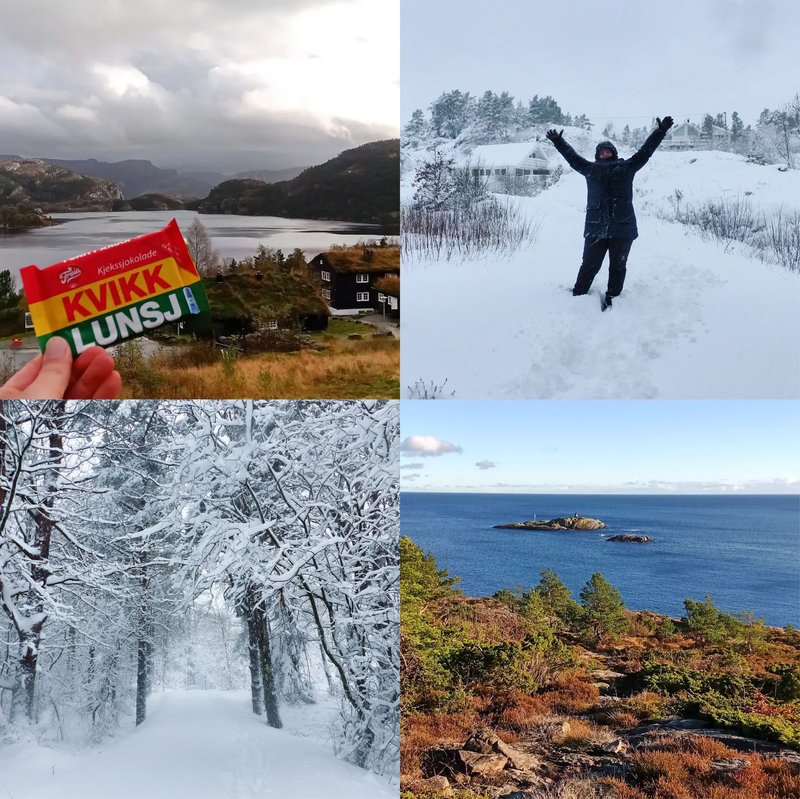
Shortly before my last Covid test suddenly had two stripes last Tuesday, I had moved house. Out of the dormitory, into nature, into a small, red and white wooden house on the edge of a village near Grimstad, right next to the forest and coast. Now I have to drive to university, but I live with a fellow Erasmus student on the property of a Norwegian family who sail, kayak and work a lot. We were lucky that we were able to isolate ourselves so well here, so the first recovery walks to the sea (200m away) were no problem. All the better that delicious mushroom meals were also available. It's a dream come true for me to live in a little hut in the countryside!
With julebrus by the fireplace, we were able to make ourselves comfortable for a week and a half and wrap up warm to cure ourselves. The numbers are also rising again in Norway, but there are no measures in place here yet. Nobody has been wearing a mask for a very long time, and coronavirus is hardly a problem anymore. Now it's back to university life after the forced break!
What could be better than snow in winter? Although it has now thawed again, the south coast of Norway had beautiful winter weather for two days, with over 30 cm of fresh snow in one night and a powdered wooden hut. Was I unable to go to the university library on Tuesday because the village road had not yet been cleared? Maybe. Did I make snow angels and go for a winter walk instead? Definitely!
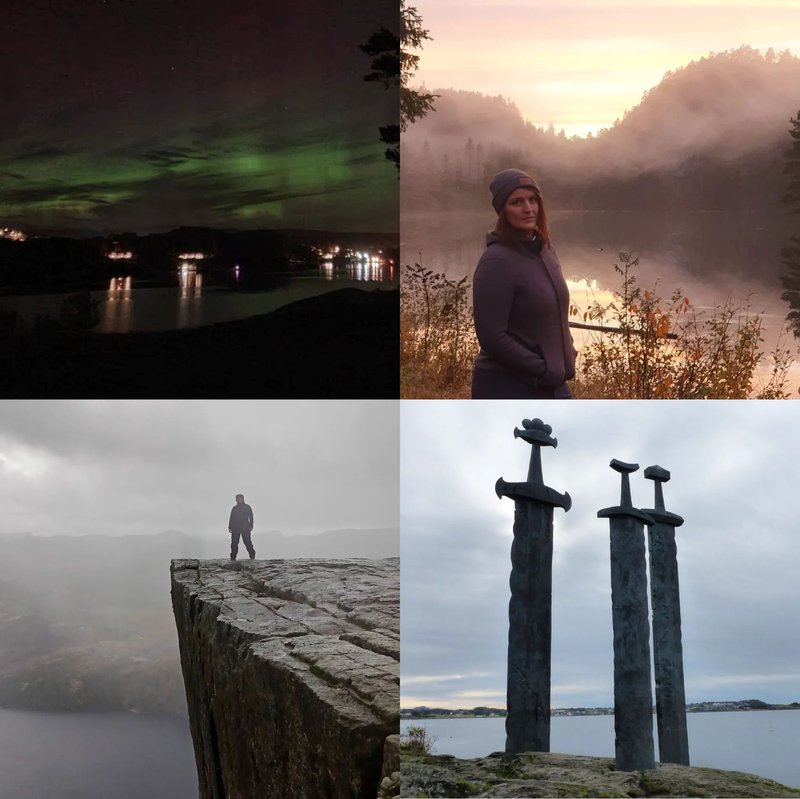
Not so easy to photograph, the Northern Lights! On Sunday and Monday the time had come and Grimstad shone in green-violet beauty - my first Aurora Borealis, hopefully not my last. Photographically, it was even visible over Kiel.
You can tell that the cold season is beginning in Norway by the fog, all the rain, the sudden increase in hot drink consumption and the changes in the supermarket. For the national dish Fårikål (sheep in cabbage) there is lamb and white cabbage everywhere and the phenomenon of Julebrus (Christmas fizz - somehow tastes like energy with root beer) can be found in every supermarket. During this time, I spend a lot of time studying and working at university. My Master's courses are very work-intensive and demanding, and the semester is divided into two parts in many courses: a theory/exercise block in the first half and group projects in the second half. I meet up regularly with my fellow students to get to grips with the many tasks.
Pro tip for your foreign stays: get in touch with the people from the Erasmus Student Network! Whether it's information about university and studying, new contacts or organized events, it's definitely worth it. Last weekend, I went on a trip to Stavanger and Preikestolen together with 150 other internationals. From the Preikestolen base camp we hiked up 300 meters in 4 degrees and rain/hail to the most breathtaking sight I've ever seen. Tusen takk, @esnuia!
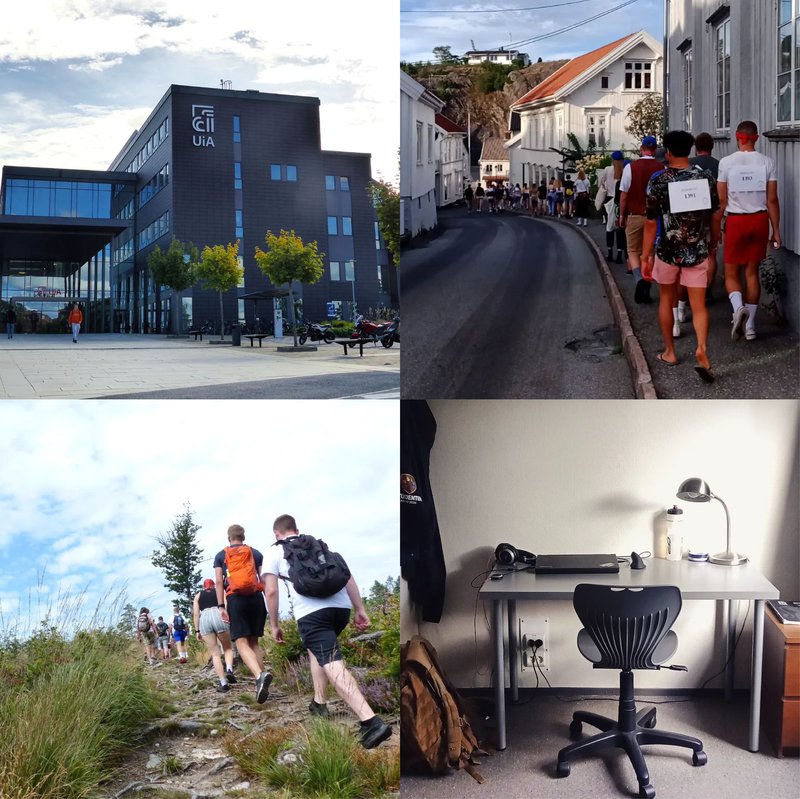
International campus life! Since most of the internationals moved into the halls of residence ("Bolig"), the Erasmus Student Network (ESN) in particular has been organizing all kinds of leisure activities here in addition to the welcome days - hikes, for example, with berry picking in the countryside around Grimstad, of course! The Bluebox event center right on campus is often the starting point here: concerts, clubbing, quizzes, games evenings, Waffle Wednesday, the Norsk Café for learning Norwegian or the famous city-wide pub crawl, where students dress up and have to solve tasks in groups. Grimstad may be a small City, but student life exists, flourishes and is of course very much enjoyed by us internationals alongside university!
With over 14,000 students, the UiA is definitely one of the larger and older universities in Norway. Before the merger of various colleges in 1994, some had already existed since 1839. The main Grimstad campus, built entirely around the modern, central atrium with canteen, library, study areas and sitting areas, is home to the faculties of information and communication technology, engineering and health sciences. Around 4000 students live and study on the hill in the southern part of the City.
[But] Realtalk: the other side of the semester abroad, which should also be talked about.
- it happens: hanging on your cell phone a lot to stay connected at home - solution: invite friends over directly to show them your new life! [...]
- building new social relationships at the same time, which is always associated with uncertainty. Especially as an international, it's incredibly important not to lose touch in the early days. Pro tip: take part in as many events as possible (ESN, sports, excursions, parties)!
- Finding new routines for your everyday life can be difficult, so it can be helpful to get together with people for fixed working hours and leisure meetings.
- the simple culture shock. How do I have to pay 212 crowns for a 5-minute consultation and referral at the doctor's? It's best to ask locals about cultural peculiarities.
- Sometimes you simply feel lonely and isolated when working and studying in your own dorm room - go to the library and form study groups! Or get out into nature, it's also good to study in beautiful surroundings.
- Locals can be more difficult to approach, which is a peculiarity in Scandinavia - networks such as buddy systems and ESNs can help!
Not everything is always rosy, not everything new is great, moving to a foreign country always means paying duties, energy and time to adjust. [...] But you know that it usually gets better if you accept that these phases exist and that you can help yourself through them.
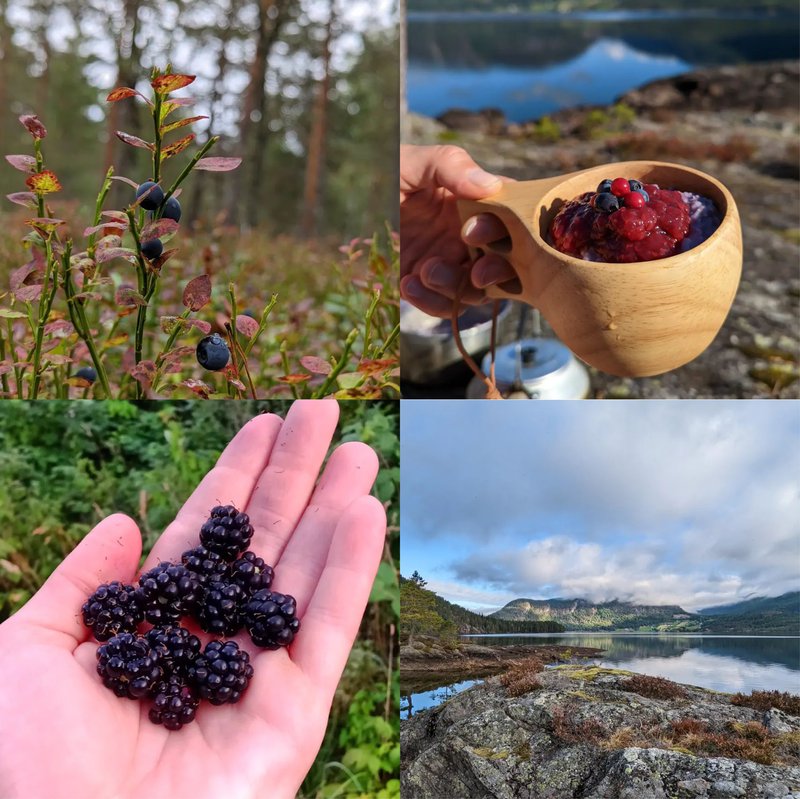
At the moment I'm trying to spend as much of my time outside as possible before it gets colder, wetter and darker. Norwegian nature still has a lot of free goodies to offer, especially the last berries of the season (blueberries, lingonberries, blackberries). The mushrooms are sprouting like crazy right now - a good alternative to the expensive supermarket! I'm currently picking some several times a week, either to use in delicious dishes such as risotto and scrambled eggs or to dry them for later. Porcini and butter mushrooms in particular grow everywhere here.
Guided mushroom tours make it very easy to gradually identify more species. Safety note: never eat mushrooms, plants and berries that you cannot identify 100% correctly and beyond doubt!
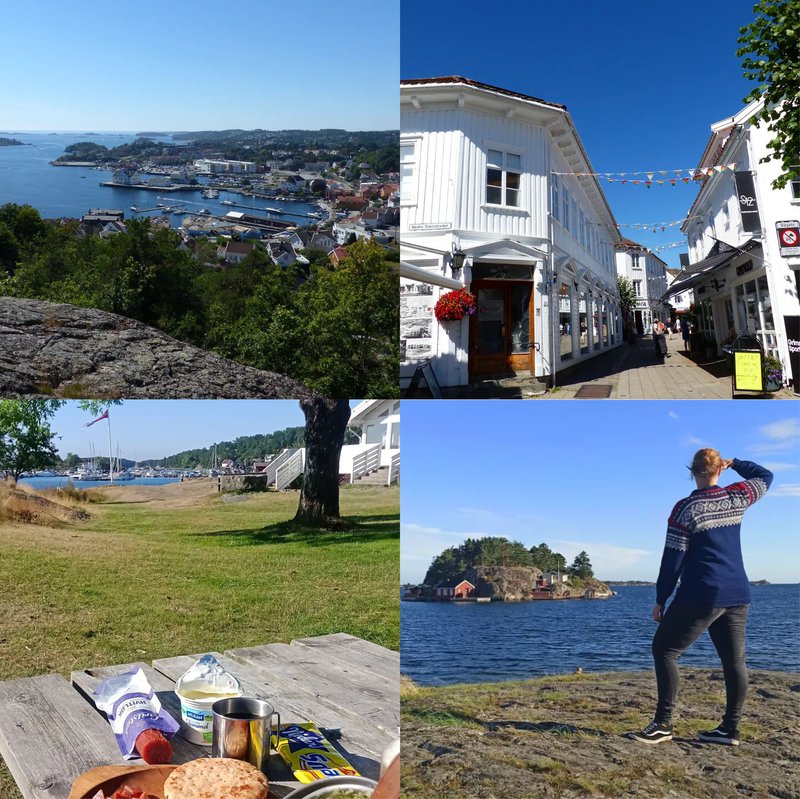
Grimstad in Aust-Agder is considered a "pearl of southern Norway" with its 13,500 inhabitants, the typical wooden houses and the natural surroundings (beautiful archipelago!). In terms of size, I couldn't have said it any better, as almost everything is within walking or cycling distance (very good cycle paths!). The rocky Groos beach park, my new favorite spot right next to the dormitory, was used for my overnight stay on my first night here, including a hearty breakfast.
You can't expect a vibrant nightlife from a small, Norwegian coastal town, but the students here definitely know how to party, as I will report [later].