
Science Day at the HAW Kiel
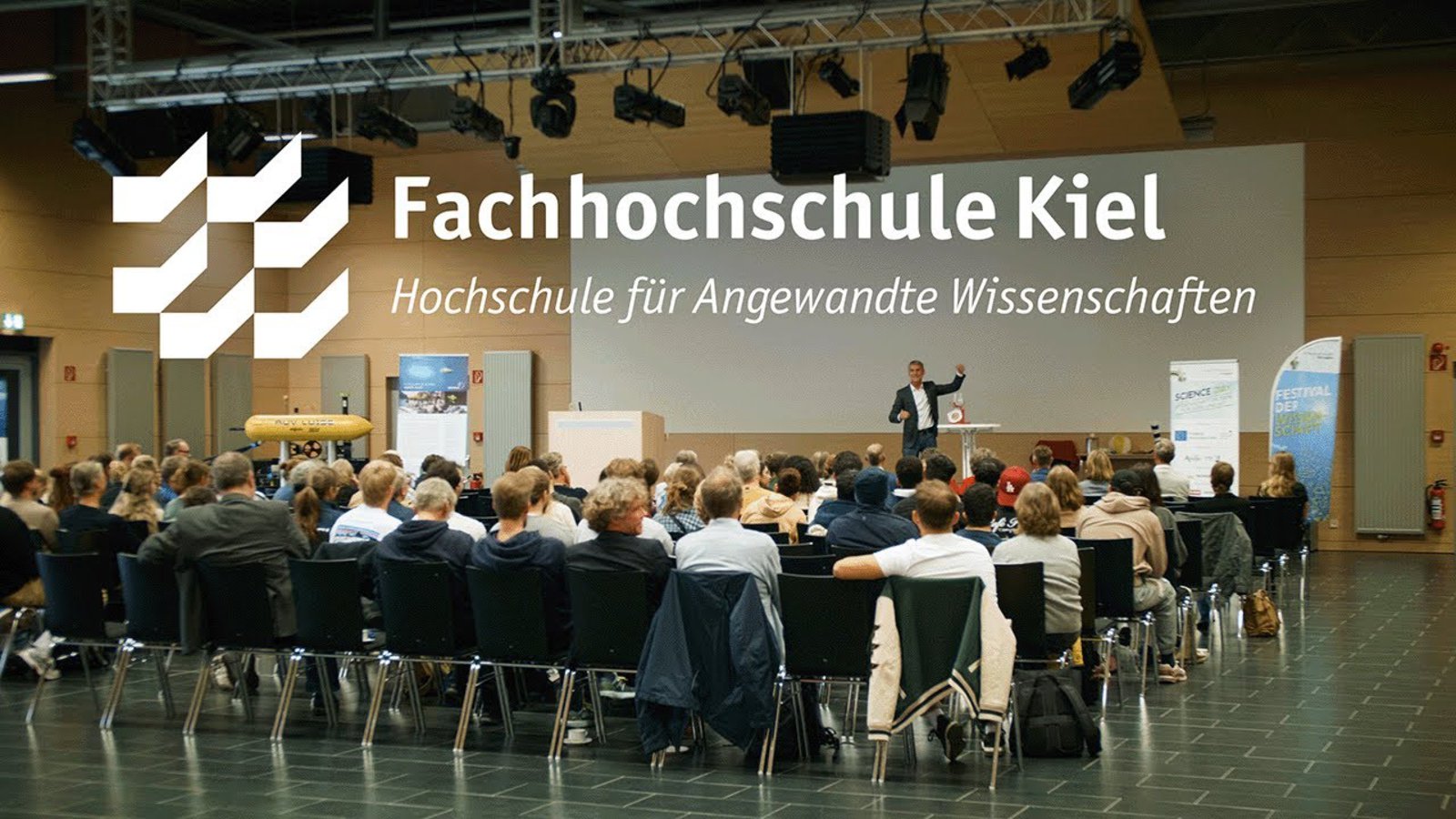
We’re participating in the Europe-wide Science Day and will be offering insights into current research and teaching at our university. Save the date: September 25, 2026.
Our program for the day:
HAW Kiel's campus radio will be broadcasting live on Science Day 2025 from 10 am to 1 pm.
The best of Science Day will be available to listen to for three hours.
Where? Large lecture hall building at HAW Kiel, Sokratesplatz 6
At the Youth Campus, you can experience applied sciences up close.
From 10 a.m. to 4 p.m., visitors can see how robots play games and dance, and immerse themselves in virtual worlds.
Where? HAW Kiel Youth Campus, Langensaal 45.
Want to experience the forces of nature from a safe distance—or up close? You can do just that here in our lab!
The demonstration runs every half hour from 10:00 a.m. to 5:00 p.m. (approx. 30-minute demonstrations, duration 20 minutes).
Where? Schwentinestraße 3, C11
A hands-on activity for preschoolers that focuses primarily on exploring robotics.
From 10 a.m. to 6 p.m. at the Youth Campus, Langensaal 45.
Between 10:30 a.m. and 12:00 p.m., three lab tours will be offered (each lasting half an hour). The maximum number of participants per tour is limited to 10 people.
The tours will take place in Building C06. The meeting point for each tour is in front of the building’s entrance at Schwentinestr. 6.
Between 10:30 a.m. and 12:00 p.m., there will be three tours of the lab (each lasting half an hour). The maximum number of participants per tour is limited to 10 people.
You can get a glimpse of the shipbuilding flow laboratory in Building C06. Participants should meet in front of the building’s entrance at Schwentinestr. 6.
Between 10:30 a.m. and 12:00 p.m., there will be three lab tours (each lasting half an hour). The maximum number of participants per tour is limited to 10 people.
The wind tunnel tours will take place in Building C11. The meeting point for each tour is near the pedestrian bridge leading to Building C11 (Schwentinestr. 12).
What exactly are these alternative energy sources? Visitors can find answers to this question at the hands-on experiment, which begins every hour from 12:00 p.m. to 6:00 p.m. It takes place in the foyer of Lerndock23.
Control a model wind turbine yourself—visitors can do this from 2:00 to 4:00 p.m., with sessions starting every 15 minutes, during this demonstration experiment
Where? Building C06, Room 1.25, access via Schwentinestraße 7
From 2:00 p.m. to 6:00 p.m., the Computer Museum invites visitors to embark on an entertaining and informative journey to the roots of information technology.
What does our electromagnetic environment actually look like? Visitors can find answers to this question in this demonstration experiment/workshop from 4:00 p.m. to 6:00 p.m.
Where? Institute for Communication Technology, Building C13, Room 3.24, Grenzstraße 5.
In this program, children between the ages of five and eight can learn the cardinal directions with the help of a mnemonic and track the sun’s path across our hometown. After sunset, they’ll learn about some constellations, the movement of the stars, and the phases of the moon. Then they’ll observe astronauts working under their unusual conditions on the moon.
The presentation begins at 3:30 p.m. at the Mediendom (Building C06 ).
Please reserve tickets via the Mediendom website.
Astronomy can reliably predict what will happen in space billions of years from now: What will become of our Earth, the Sun, and the entire universe? In this show, audience members ages ten and up can embark on an astronomical journey through time into the distant future.
The show begins at 6:30 p.m. at the Mediendom (C06 ).
Please reserve tickets via the Mediendom website.
Ships, machinery, and other human activities make the ocean noisier than many people realize. Leonie Föhring, a doctoral student in naval architecture at HAW Kiel, explains how underwater noise is generated, what cavitation has to do with it, and why this is problematic for marine life.
At 5:30 p.m. at SEALEVEL on the Alter Markt.