Maritime systems

About 70 percent—and thus the majority—of the Earth’s surface is covered by seawater. Our oceans not only play a central role in climate research and provide sensitive ecosystems for numerous organisms, but are also a source of valuable resources and raw materials that must be used sustainably. Exploring the oceans—and especially peering into the depths—has always presented humanity with major challenges, but this field is advancing rapidly thanks to technological progress. We are now exploring increasingly remote regions, and innovative technologies are opening up new possibilities at sea as well—such as the use of offshore wind farms for clean energy production or the development of climate-friendly and digital shipping. Maritime shipping transports 90 percent of our goods worldwide while accounting for about 3 percent ofCO2 emissions (1) and serves as the backbone of our globalized economy. The key technologies developed in the maritime economy are of systemic importance for strategic security.
In Schleswig-Holstein, the maritime business is a key driver with an annual turnover of approximately 10.7 billion euros. At least 30,300 people are employed in over 2,100 companies here—that is three percent of the workforce in Schleswig-Holstein(2). Despite a challenging global market environment, the following sub-sectors remain industries of the future: maritime shipping, ports, shipbuilding and the shipbuilding supply industry, marine technology, offshore wind energy, and maritime research and development. The sector’s future viability depends heavily on the development of new climate-neutral and digital technologies, as well as marketable innovations. A key competitive factor is the ability to develop and manage entire value chains. To this end, HAW Kiel relies on collaboration among the diverse areas of expertise within its six departments.
Projects
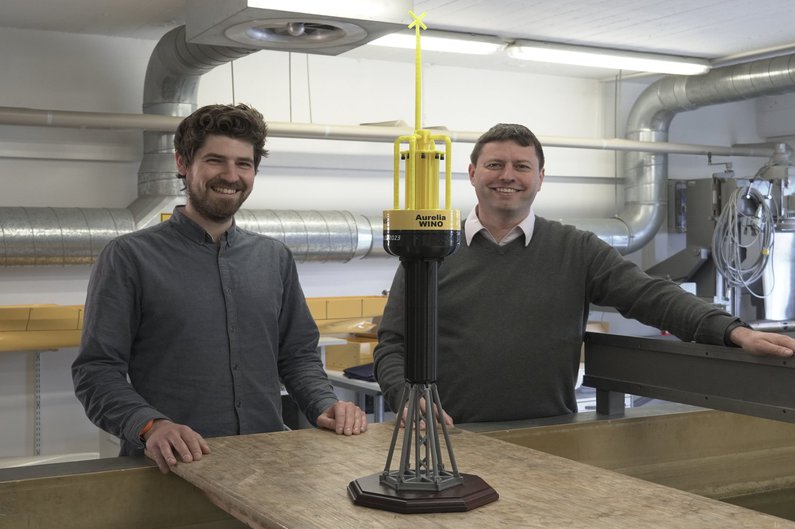
The development of a concept for the installation and maintenance of floating wave power plants (right) is one of our currently funded projects in the "Maritime Systems" Focus on.
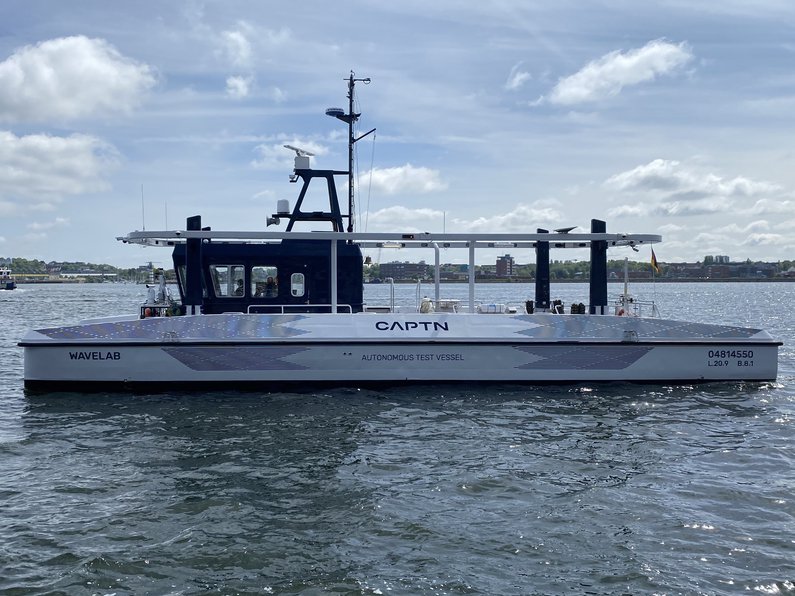
The project"Fuel-Ship2Ship - Autonomous robot-assisted refueling of ships under sea conditions" in cooperation with our R&D GmbH (left) is funded until April 2027.

(1) Cf. Ministry of Buisness, Transport, Labor, Technology and Tourism, last accessed: 02.05.2024
(2) Hitscher, L.: CO2-neutral by 2050 - can it be achieved? www.tagesschau.de/wirtschaft/unternehmen/schifffahrt-klimaziele-co2-ausstoss-101.html (2021), accessed: 24.06.2024